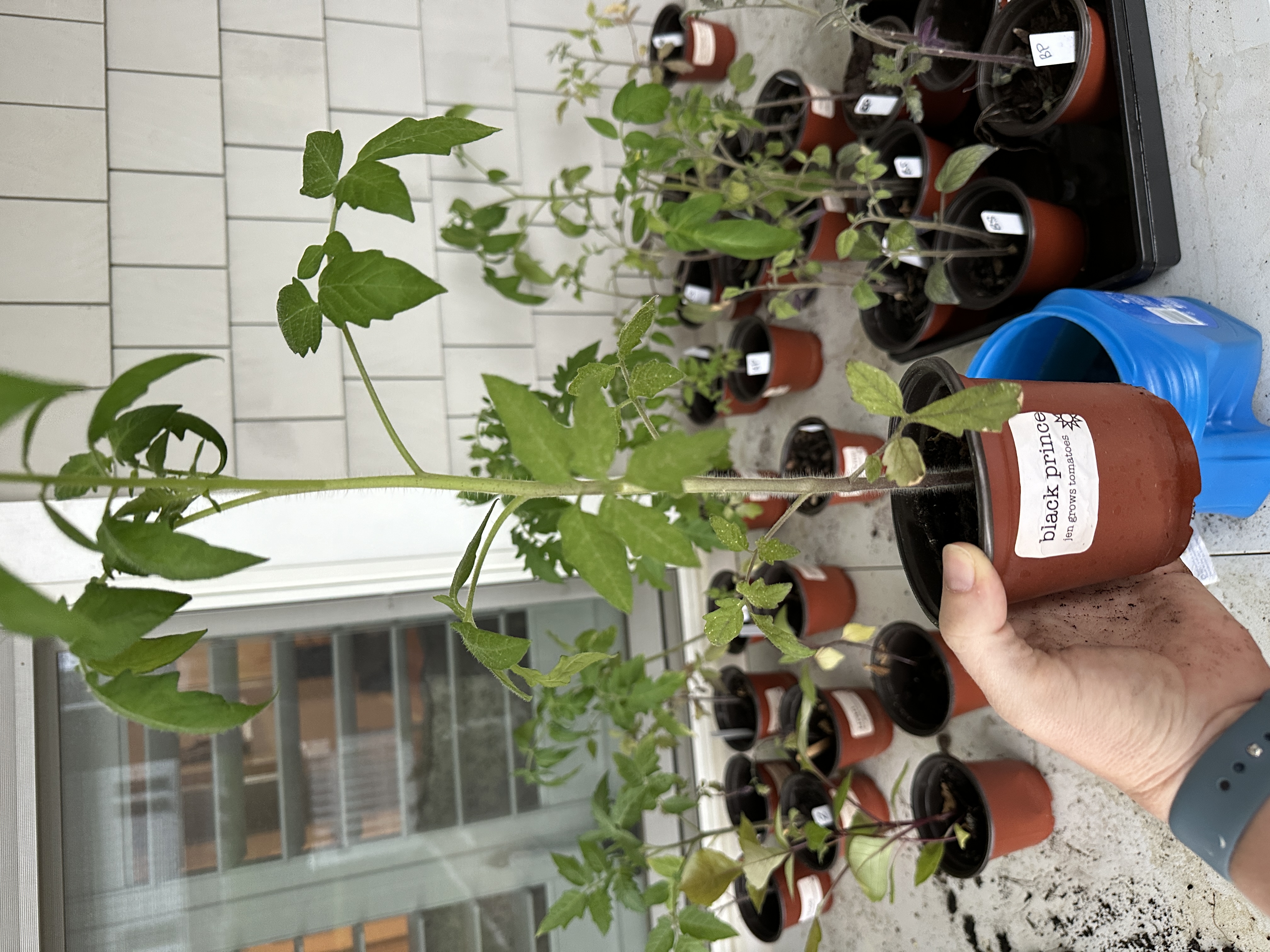
Scituate, MA · Est. 2017

Rare
heirloom
tomatoes.

Boutique garden plant grower featuring varieties you won't find at big box stores. Grown organically, raised on passion — and a few too many seed catalogs.

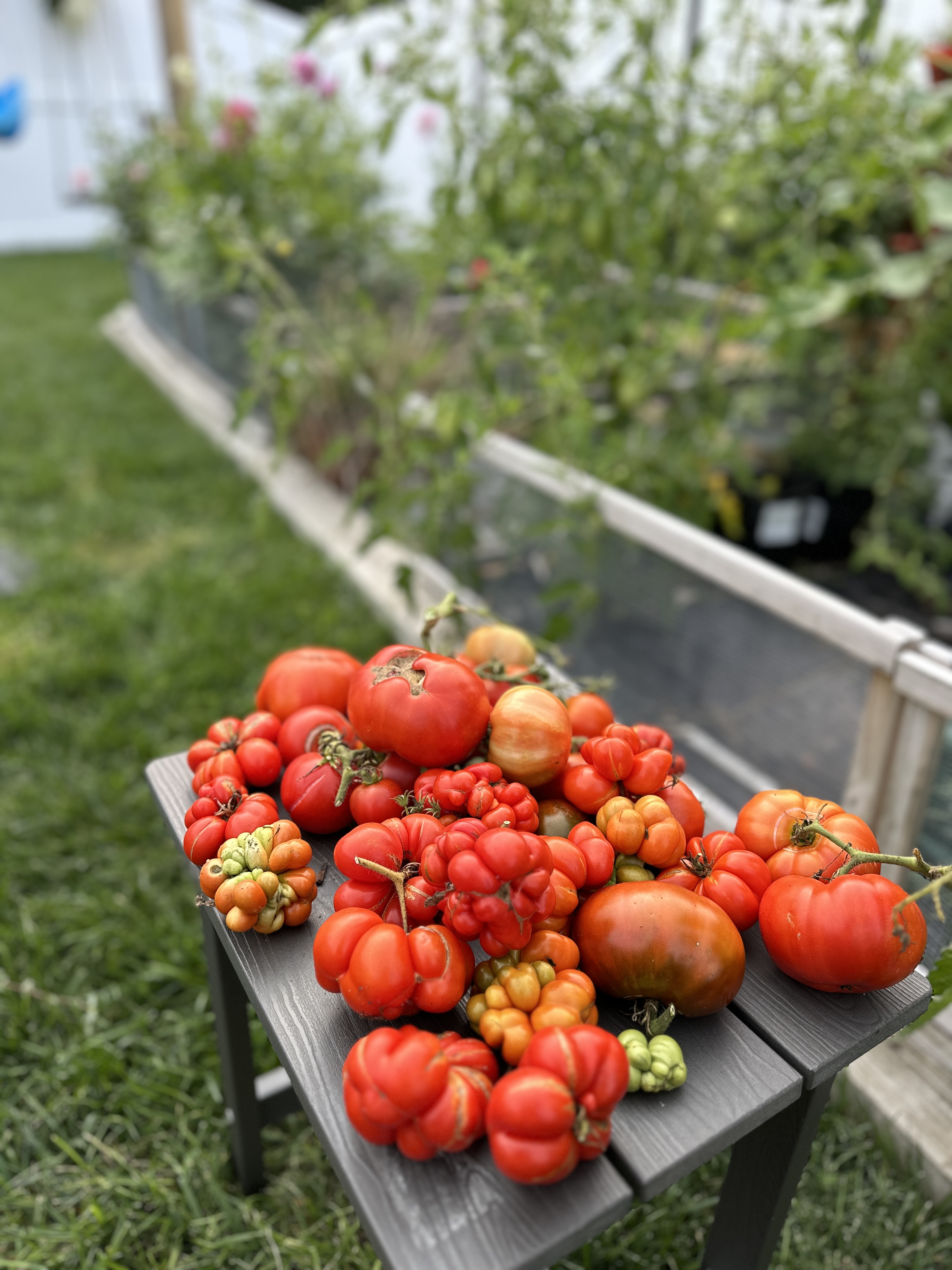
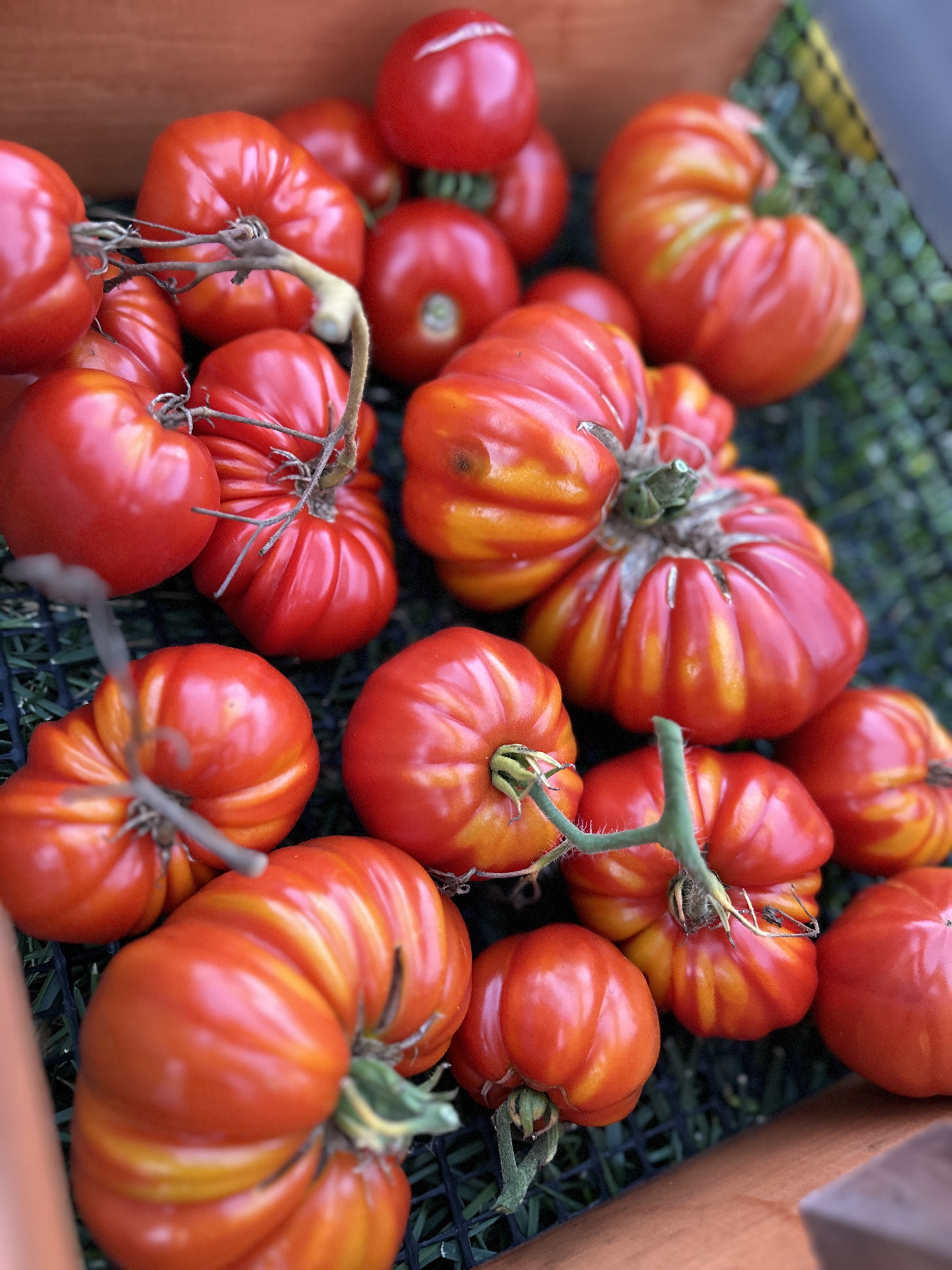
Jen's heirloom tomato harvest — Scituate MA
Grown with love · Scituate MA
2026 Season Open
57+ Varieties Grown Organically Raised Scituate, MA First Come First Served 11 Varieties This Season 200+ Tomato Babies Ready Early May 57+ Varieties Grown Organically Raised Scituate, MA First Come First Served 11 Varieties This Season 200+ Tomato Babies Ready Early May
About Jen

A boutique farm stand with a serious variety problem.

Hi, I'm Jen. I've been a sucker for a garden for many years. Fun fact? My North End fire escape was once declared a "fire hazard" because I had so many plants — so naturally, I moved to Scituate and got more space.

I grow everything organically, and every variety I choose is something I personally fell in love with. You won't find these at Home Depot or Whole Foods — that's kind of the point.

Plants are raised on Reality TV show podcasts (true story) and released into the world every spring to nice homes. 🍅

57+
Varieties grown over the years
11
Varieties available this season
200+
Tomato babies ready to adopt
100%
Organically grown, always
Jen's garden harvest — tomatoes with dahlias in background
Jen's Picks

Gear I actually use

Everything I rely on from seed to sale — tried, tested, and genuinely recommended.

See all picks ↓
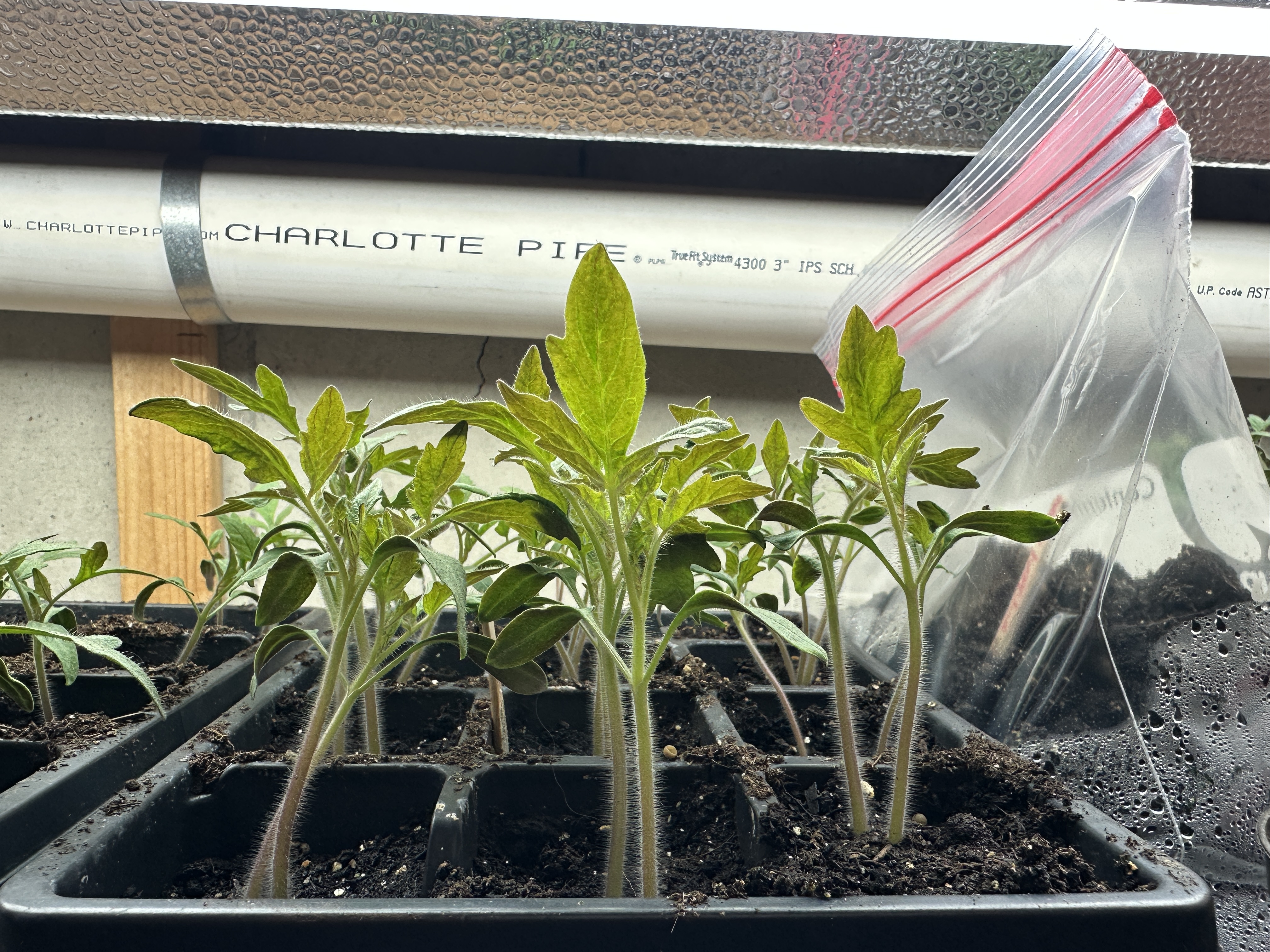
Tomato seedlings under grow lights
💡

LED Grow Light

Full spectrum clip lamp with timer and dimmer. What I use to keep seedlings stocky all winter.

Shop on Amazon ↗
🌡️

Seedling Heat Mat

Non-negotiable for germinating heirlooms. Keeps soil at the sweet spot and cuts germination time significantly.

Shop on Amazon ↗
🌱

Organic Potting Mix

Back to the Roots 100% organic. What I fill every tray with — drains well and seedlings love it.

Shop on Amazon ↗
🌿

Neptune's Harvest Fertilizer

Organic tomato & veg fertilizer (2-4-2). Smells terrible, works incredibly. My plants go nuts for it.

Shop on Amazon ↗
This Season

2026 Varieties

11 handpicked varieties available this season. First come, first served — plants sell out by Memorial Day.

Book a time slot →
4th of July Hybrid
Early Slicer · Hybrid

We grow this babe every year. The most beautiful perfectly red and round tomatoes — and one of the earliest producers around.

45–50 daysDays to harvest
3–4 ozFruit size
Indet.Growth
Black Krim
Beefsteak · Russian Heirloom

Russian heirloom from the Crimean Peninsula. Smoky, rich, and stunning — deep brownish-purple with olive-green shoulders. A true showstopper.

78–80 daysDays to harvest
10–16 ozFruit size
Indet.Growth
Black Beauty
Beefsteak · Heirloom

The world's darkest tomato. Striking blue-black skin, deep red flesh, antioxidants comparable to blueberries. Won multiple taste tests. Flavor deepens off-vine.

75–85 daysDays to harvest
10–14 ozFruit size
Indet.Growth
Gold Medal
Beefsteak · Heirloom · 1921

Show-stopping bicolor. Golden-yellow skin with ruby-red blushing and marbled interior. Exceptionally sweet, low acid, and fruity. A taste test legend since 1921.

85–90 daysDays to harvest
1–2 lbsFruit size
Indet.Growth
Purple Cherry
Cherry · Purple Tomato™

Purple all the way through — not just skin-deep. The Purple Tomato™ uses snapdragon genetics to produce anthocyanins throughout the whole fruit. Wild and delicious.

70–75 daysDays to harvest
1–2 ozFruit size
Indet.Growth
Sun Gold
Cherry · Hybrid

The sweetest cherry tomato alive. They never even make it to the kitchen. Golden-orange clusters, tropical sweetness, prolific until hard frost. An absolute classic.

65–67 daysDays to harvest
~1 ozFruit size
Indet.Growth
Mortgage Lifter
Beefsteak · Heirloom · 1930s

The tomato that paid off a mortgage. "Radiator Charlie" bred this in 1930s West Virginia and sold plants for $1 each. Massive, meaty, legendary flavor.

80–90 daysDays to harvest
1–2.5 lbsFruit size
Indet.Growth
Hawaiian Cherry
Cherry · Heirloom

Sweet, fruity, zero acidity — like candy straight off the vine. A natural sport of Hawaiian Pineapple. Incredible market sample fruit. A crowd pleaser for all ages.

70–75 daysDays to harvest
~1 ozFruit size
Indet.Growth
Piennolo Del Vesuvio
Cherry / Paste · Italian Heirloom

Ancient Italian treasure from the volcanic slopes of Mount Vesuvius. Intensely sweet and tangy. Traditionally hung in bunches — stays good for up to 6 months.

65–75 daysDays to harvest
~1 ozFruit size
Indet.Growth
Oxheart
Oxheart · Heirloom · 1920s

A grand old heirloom. Enormous heart-shaped pink-red fruit with almost no seeds and dense meaty flesh. Mild, sweet, and perfect fresh or sauced.

80–90 daysDays to harvest
10–16 ozFruit size
Indet.Growth
Rebel Starfighter
Oxheart / Specialty · Heirloom

Created by Russ Crowe. Heart-shaped with red-purple skin, black shoulders, and radial lightning-bolt lines. Rich, tangy umami flavor. The most dramatic tomato in the garden.

80–90 daysDays to harvest
4–12 ozFruit size
Indet.Growth
The Full Archive

Every tomato I've ever grown

57+ varieties and counting. Highlighted rows are available this season (2026).

Variety Type Days Size (oz) Color Growth Heirloom? 2026
Jen's heirloom tomato harvest varieties
How to Buy

Shopping with Jen

There are two ways to shop — with me or by yourself. Either way, here's what to expect.

01

Shop with Jen

Book a time slot and I'll walk you through the varieties, answer questions, and help you pick the right plants for your garden. Slots are limited — I'm busier than ever with a toddler in tow.

02

Shop yourself

Browse, pick, and go at your own pace. Great if you already know what you want. Same first-come, first-served rules apply.

FAQs

Good things to know

When are plants ready?
Plants are anticipated to be ready in early May. I normally sell out by Memorial Day — don't sleep on it.
How do I know when they're ready?
Follow my Facebook page and/or the plant sale event — I'll post updates there as soon as they're ready to go.
How does first come first served work?
Plants are on a first-come, first-served basis. With 200+ tomato babies, I'm eager to get them to nice homes 🍅
Where are you located?
I'm in Scituate, MA. You'll get the exact address once you've set up a time to come by.
Questions?
Send me a Facebook DM — it's the fastest way to reach me.
Growing Tips

Know before you grow

Everything I've learned from years of growing heirloom tomatoes in New England — from seed to harvest. Written for home gardeners in coastal Massachusetts, but useful anywhere.

New England Timing
When to plant
in coastal MA
📅 Seasonal Guide

One of the most common mistakes New England gardeners make is planting tomatoes too early. The last frost date for coastal Massachusetts is approximately May 15 — and tomatoes planted in cold soil sulk, stall, and sometimes don't recover.

Here's the schedule I follow every year:

🌱
Late Feb — Early March: Start seeds indoors under grow lights with heat mats. Give them 14–16 hours of light per day.
☀️
1–2 weeks before planting: Harden off your plants — move them outside for a few hours daily, gradually increasing sun and wind exposure.
🌿
Mid-to-late May: Safe to plant outside once nights stay above 50°F and frost risk has passed.

This is why my plants are ready in early May — they're perfectly timed for you to harden off and plant right on schedule.

Plant Basics
Determinate vs
Indeterminate
🌿 Essential Knowledge

This is one of the most useful things to understand before you pick your varieties — and it affects how you plan your garden space and support structures.

🔴
Determinate: Grows to a set size, produces all at once, then stops. Usually 3–5 feet tall. Great for small spaces, containers, or if you want a concentrated harvest for canning.
🟢
Indeterminate: Keeps growing and producing all season long until frost. Can reach 6–10+ feet. Needs caging or staking. Gives you continuous fresh tomatoes all summer.

Every variety I sell is indeterminate. Plan for tall, vigorous vines that will produce from July through the first hard frost. Heavy duty cages or sturdy stakes are essential — the flimsy ones from big box stores will let you down.

Planting Technique
Plant your tomatoes
deep
🕳️ Pro Tip

This is one of the most impactful things you can do for your tomato plants — and most home gardeners don't know about it.

When planting, bury the stem all the way up to the lowest set of leaves. Tomato stems grow roots wherever they touch soil. More roots means more water and nutrient uptake, which means a stronger, more productive plant all season.

I bury mine so deep that sometimes only the top few inches of plant are visible above the soil. It looks alarming. The plants love it. Don't be scared — this is one of those counterintuitive gardening moves that really works.

If your transplant is very leggy (tall and spindly from being indoors), planting deep is especially important — it turns a weakness into a strength by creating an extensive root system.

Common Problems
Why tomatoes crack
— and how to stop it
🔍 Problem Solver

Tomato cracking is one of the most frustrating things to deal with at harvest time — and it's almost always preventable once you understand what causes it.

The cause: uneven watering. When a tomato gets a big drink of water after being dry for a while, the inside of the fruit expands faster than the skin can stretch — causing it to split.

How to prevent it:

💧
Water consistently: Same amount, same frequency. Big swings in soil moisture are the main culprit.
🌿
Mulch heavily: A thick layer of mulch retains soil moisture between waterings and buffers against sudden rain.
⛈️
Pick early before heavy rain: If a storm is coming and tomatoes are nearly ripe, harvest them slightly early. They'll ripen perfectly on the counter.
Growing Philosophy
Why I grow
organically
🌱 Organic Growing

I grow everything organically — no synthetic pesticides, no synthetic fertilizers. Here's why that matters, and why every plant I sell was raised this way.

🌱
Soil health: Synthetic fertilizers feed the plant but deplete the soil over time. Organic practices build soil that gets richer and more alive every year.
🐝
Beneficial insects: Pesticides don't discriminate. When you kill the bad bugs, you kill the good ones too — pollinators, predators, all of it.
🍅
Flavor: Healthy soil equals healthy plants equals better tasting tomatoes. It's really not more complicated than that.

That said — any gardening is good gardening. These are my values and my practice. You'll grow great tomatoes however you choose to do it.

Variety Knowledge
Heirloom vs
Hybrid tomatoes
🍅 Variety Guide

The terms get used a lot, but what do they actually mean — and why does it matter for flavor?

👵
Heirloom: Open-pollinated varieties passed down for generations, selected for flavor. You can save the seeds and grow the same plant next year. Bred before the era of industrial farming.
🔬
Hybrid (F1): A cross between two parent varieties, bred for specific traits like disease resistance, early production, or uniform appearance. Seeds won't breed true.

Grocery store tomatoes are typically hybrids bred for shelf life and uniform appearance — not flavor. Heirlooms sacrifice those commercial traits for something far more important: they actually taste good.

I grow both — my 4th of July and Sun Gold are hybrids that have earned their permanent place in my lineup. Most of what I grow is heirloom. The variety table above has every detail.

Pruning Technique
How to prune
tomato suckers
✂️ Most Asked Question

Suckers are the small shoots that grow in the "V" between the main stem and a branch. Left alone, they grow into full branches — which means more leaves, more flowers, and eventually more tomatoes, but also a much larger, harder-to-manage plant.

Where to find them: Look in every crotch where a branch meets the main stem. The sucker grows straight up at a 45-degree angle from that junction.

Remove when small: Pinch off suckers when they're under an inch long — no tools needed, just snap them off with your fingers. Clean and fast.
✂️
Cut larger ones: If a sucker has gotten bigger than an inch, use clean pruning shears rather than snapping — tearing a large sucker can damage the plant.
🤔
To prune or not: For indeterminate varieties in small spaces, removing suckers keeps plants manageable. In larger gardens, you can let a few grow to increase yield. There's no single right answer.

One exception: if a sucker has already grown large and has flowers on it, you may want to let it stay — it's essentially become a second vine at that point.

Plant Support
Staking & caging
your tomatoes
🌿 Essential Setup

Every indeterminate tomato plant needs support — and setting it up early (at planting time) is much easier than wrestling a 6-foot vine into a cage in July. Ask me how I know.

🪤
Cages: The most hands-off option. Place at planting and guide vines through the rings as they grow. Get heavy-duty cages — the thin wire ones from big box stores collapse under a mature indeterminate vine. Look for cages at least 5 feet tall.
🪵
Stakes: A 6–8 foot wooden or bamboo stake driven 12 inches into the ground, with the vine tied loosely as it grows. More work but gives better airflow around the plant.
🏗️
Florida weave: Run twine horizontally between stakes to support multiple plants in a row. Efficient for larger gardens with many plants.

The key rule: Whatever you use, install it at planting time. Tomato roots spread wide — driving a stake into a mature plant risks damaging the root system. Set up your support on day one and you'll thank yourself in August.

Feeding Your Plants
How to fertilize
tomatoes
🧪 Nutrition Guide

Tomatoes are heavy feeders — they need a lot to produce those big, juicy fruits all season. But what they need changes depending on where they are in their life cycle.

🌱
Early season (transplant to first flower): Higher nitrogen to support leafy growth and strong root development. I use Neptune's Harvest and worm castings worked into the soil at planting.
🌸
Flowering & fruiting: Back off nitrogen, increase phosphorus and potassium. Too much nitrogen at this stage gives you lush leaves and fewer tomatoes. Switch to a tomato-specific fertilizer or the bloom-boosting component of a trio like FoxFarm.
🍅
Mid-season maintenance: A balanced liquid feed every 2 weeks keeps production going strong through the summer. Espoma Tomato-tone and Neptune's Harvest are both excellent organic options.

One thing I always do: add a handful of bone meal to every planting hole. It provides slow-release phosphorus right at the root zone where new plants need it most. The difference it makes in early establishment is noticeable.

Seed Starting
Starting tomatoes
from seed indoors
🌱 Beginner Friendly

Starting tomatoes from seed is how I ended up with 200+ plants every spring. It starts innocently enough — a few packets of seeds, a heat mat, some grow lights. The next thing you know your grow room is a fire hazard and you've moved to Scituate.

Here's what you actually need to get started:

🌡️
Heat mat: Tomato seeds germinate best at 70–80°F soil temperature. A seedling heat mat is non-negotiable — germination rates without one are disappointing.
💡
Grow lights: A sunny windowsill isn't enough. Without supplemental light, seedlings get leggy and weak. A simple full-spectrum LED clip light run 14–16 hours a day makes a dramatic difference.
🌱
Seed starting mix: Not potting mix — seed starting mix is finer and drains better for tiny seedlings. Sow seeds ¼ inch deep, two per cell, thin to one after germination.
📅
Timing: For coastal Massachusetts, sow 6–8 weeks before your last frost date (May 15). That means late February to early March.

If starting from seed feels like too much for your first year, that's exactly what I'm here for — buy a healthy started plant and skip the seed-starting chaos. No judgment. The tomatoes taste the same either way.

Variety Selection
Best tomatoes for
New England
🗺️ Regional Guide

Growing tomatoes in New England — and especially coastal Massachusetts — comes with real challenges: a shorter season, humidity that encourages fungal disease, and the occasional cold August that makes late varieties a gamble.

Here's what I look for when choosing varieties for this climate:

📅
Days to maturity: In coastal MA, I prefer varieties that ripen in under 85 days. Anything over 90 days is a risk — you're betting on a long, warm fall.
🛡️
Disease tolerance: Humid New England summers create perfect conditions for early and late blight. Varieties with some natural resistance (or a thick skin) hold up better.
🌡️
Cool-weather setting: Some varieties set fruit even when nights dip below 55°F — a real advantage here. 4th of July Hybrid is an excellent example.

From my lineup, the most reliably productive varieties for New England conditions are 4th of July Hybrid (earliest producer, sets fruit in cool weather), Sun Gold (prolific cherry, incredibly disease resistant), Mortgage Lifter (large beefsteak that consistently performs), and Black Krim (handles our climate beautifully for a Russian heirloom).

Garden Setup
Growing tomatoes
in raised beds
🏡 Garden Design

Raised beds are my preferred way to grow tomatoes — and if you have the option, I'd recommend them strongly over in-ground growing for most New England home gardeners.

🌡️
Warmer soil: Raised beds warm up faster in spring — sometimes 2–3 weeks ahead of in-ground soil. In a short-season climate like ours, that's meaningful extra growing time.
💧
Better drainage: Tomatoes hate wet feet. Raised beds drain freely, reducing root rot and fungal issues that plague in-ground gardens in wet summers.
🌱
Soil control: You fill it with exactly what you want — a rich mix of compost, aged manure, and quality topsoil. No fighting with clay or rocky New England native soil.
📐
Spacing: For indeterminate varieties, plan for at least 24–36 inches between plants in a raised bed. They need air circulation to stay healthy through humid summers.

I grow in raised beds myself — you can see them in the background of my harvest photos. Once you grow in raised beds you won't go back.

Variety Guides

The 2026 varieties — in depth

Every variety I'm growing this season has a story. Here's what makes each one worth growing — flavor profiles, origins, quirks, and growing notes from my own experience.

Early Slicer · Hybrid
4th of July Hybrid
🔴 45–50 Days · Indeterminate

We grow this one every single year without fail — and there's a reason. The 4th of July is one of the earliest-producing tomatoes available, ripening 45–50 days after transplanting. In Massachusetts, that means fresh tomatoes by early July while everyone else is still waiting.

The fruits are a deep, classic red and almost perfectly round — the Platonic ideal of what a tomato should look like. Size sits between a cherry and a full slicer at around 3–4 oz, which makes them perfect for salads and snacking.

🌡️
Cool-weather setter: Sets fruit even when nights dip below 55°F — a major advantage in New England springs and falls.
📅
Extended season: Keeps producing all the way to hard frost. You get early tomatoes AND late tomatoes from one plant.
🍽️
Flavor: Sweet, mild, classic tomato flavor. Crowd-pleasing rather than complex — which is exactly what you want from a workhorse variety.

If you've never grown tomatoes before and want a reliable, early, and beautiful plant — start here.

Beefsteak · Russian Heirloom
Black Krim
🖤 78–80 Days · Indeterminate

Black Krim is one of the most celebrated heirloom tomatoes in the world — a variety from the Crimean Peninsula that arrived in the United States around 1990 and immediately won over serious tomato growers.

The skin is a deep brownish-purple with distinctive olive-green shoulders. Slice it open and the interior is dark brick-red, dense, and juicy. It's a dramatic, beautiful tomato that looks unlike anything at a grocery store.

🍷
Flavor: Famously smoky, rich, and complex — with a slight saltiness that sets it apart from sweeter heirlooms. Lower acidity than many red varieties.
⚖️
Size: Large beefsteak, typically 10–16 oz. Some fruits develop dark shoulders and greenish streaking — this is normal and actually a sign of good flavor development.
☀️
Growing note: Needs consistent moisture to prevent cracking. Full sun (8+ hours) brings out the deepest flavor and richest color.

Black Krim is the tomato that converts people. If you've never understood why heirloom tomatoes are worth the fuss, one taste of a ripe Black Krim will explain everything.

Beefsteak · Heirloom
Black Beauty
🖤 75–85 Days · Indeterminate

Black Beauty holds a legitimate claim to being the darkest tomato in existence. The skin is a striking blue-black — not just dark red, but genuinely deep purple-black — caused by high concentrations of anthocyanin pigments in the outer layer of the fruit.

It won taste tests at the 2015 National Heirloom Exposition, which is not a small thing. That competition takes heirloom tomatoes seriously, and Black Beauty beat some legendary varieties.

🫐
Antioxidants: The same anthocyanins that make blueberries healthy are present in significant quantities throughout Black Beauty's skin. Genuinely nutritious, not just beautiful.
🍷
Flavor: Rich, earthy, and savory with an unusual depth — some tasters describe hints of blueberry or dark fruit. The flavor deepens and sweetens a day or two after harvest.
☀️
Color tip: The darkest coloring develops with direct sun exposure. Fruits shaded by leaves will be noticeably lighter. Let the sun reach them.

This is the tomato that makes people stop and stare at the farmers market. It earns those stares.

Beefsteak · Heirloom · 1921
Gold Medal
🥇 85–90 Days · Indeterminate

Gold Medal has been winning taste tests since 1921. Originally known as "Ruby Gold," it was renamed by heirloom seed preservationist Ben Quisenberry in 1976 — a name that proved prophetic given its ongoing track record in competitions.

The exterior is golden-yellow with a gorgeous ruby-red blush at the blossom end. Slice it open and you get a marbled interior of gold and pink that's almost too beautiful to eat. Almost.

🍬
Flavor: Exceptionally sweet with very low acidity — fruity and almost melon-like. If you find regular tomatoes too acidic, Gold Medal is your variety.
⚖️
Size: Large beefsteak, regularly hitting 1–2 lbs per fruit. One tomato makes a whole caprese salad.
📅
Patience required: At 85–90 days, Gold Medal is one of the later varieties in my lineup. The wait is genuinely worth it.

Gold Medal is the variety I recommend most often to people who say they don't like tomatoes. It tends to change their mind.

Cherry · Purple Tomato™
Purple Cherry
💜 70–75 Days · Indeterminate

This is the most scientifically interesting tomato I grow. The Purple Cherry — sold as The Purple Tomato™ by Norfolk Healthy Produce — is not just a purple-skinned tomato. It's purple all the way through the flesh, which is genuinely unusual and required some remarkable plant science to achieve.

Two genes from snapdragon flowers were introduced that act as "on switches," activating the production of anthocyanin pigments throughout the entire fruit — not just the skin. The result is a cherry tomato that's purple from skin to seed.

🔬
What makes it different: Traditional purple tomatoes (Cherokee Purple, Black Krim) have anthocyanins only in the skin. Purple Cherry has them throughout the flesh — producing dramatically higher antioxidant levels.
🫐
Antioxidants: Comparable to blueberries — far higher than any conventionally bred tomato variety.
🍽️
Flavor: Sweet, slightly tart cherry tomato flavor with good depth. Delicious as well as dramatic.

When people ask me what's the most interesting tomato I grow, this is the answer. Cut one in half and show someone — the reaction is always the same.

Cherry / Paste · Italian Heirloom
Piennolo Del Vesuvio
🌋 65–75 Days · Indeterminate

Piennolo del Vesuvio has been grown on the slopes of Mount Vesuvius in the Campania region of Italy since ancient times. The volcanic soil — rich in minerals from thousands of years of eruptions — gives these tomatoes a flavor intensity that's genuinely hard to describe without tasting them.

They're small, pointed at the blossom end, with thick skin and very little water content. That concentrated flesh is what makes them extraordinary for cooking — and what makes them store so exceptionally well.

🏺
Traditional storage: Harvested in bunches and hung to dry, Piennolo del Vesuvio tomatoes stay fresh for 4–6 months without refrigeration. Italian families traditionally hang them from rafters to use through winter.
🍅
Flavor: Intensely sweet and tangy with a mineral depth. The flavor actually concentrates and deepens after harvest as the tomatoes slowly dry.
🫕
Best use: Exceptional for sauce — the low water content means sauce made from these is rich and thick without hours of reduction.

This is one of the rarest varieties I grow. If you've never tried a Piennolo del Vesuvio, this season is your chance.

Oxheart · Heirloom · 1920s
Oxheart
❤️ 80–90 Days · Indeterminate

Oxheart is one of those old heirlooms that never gets the attention it deserves. It's been grown in American gardens since at least the 1920s, and it produces some of the meatiest, most substantial tomatoes I've ever grown.

The shape is distinctive — a large, heart-shaped pink-red fruit that tapers toward the blossom end. Inside, there's almost no seed cavity and very little gel — just dense, meaty flesh all the way through. A single large Oxheart can weigh over a pound.

🍽️
Flavor: Mild, sweet, and rich — never acidic. The meaty texture makes it exceptional for fresh eating in thick slices, for sandwiches, and for sauce that doesn't need long cooking.
🥗
Best use: The low seed and gel content makes it ideal for salads and dishes where you don't want extra liquid. Also excellent roasted.
📅
Patience required: At 80–90 days, Oxheart is worth the wait — but plan ahead and give it plenty of growing season.

Oxheart is the tomato I reach for when I want something simple and perfect: a thick slice, good olive oil, flaky salt. That's it.

Beefsteak · Heirloom · 1930s
Mortgage Lifter
💰 80–90 Days · Indeterminate

The origin story of Mortgage Lifter is one of the best in all of gardening. In the 1930s, a radiator repairman in Logan, West Virginia named M.C. "Radiator Charlie" Byles spent six years crossing four giant tomato varieties to create something extraordinary. He then sold plants for $1 each — a significant price during the Depression — until he paid off his $6,000 mortgage. It took him six years.

The tomato is as impressive as the story. Massive, pink-red beefsteak fruits averaging 1–2 lbs, with dense meaty flesh, very few seeds, and a rich, sweet flavor with low acidity.

⚖️
Size: Regularly produces fruits over 1 lb, occasionally over 2 lbs. One slice covers an entire piece of bread. Plan your BLTs accordingly.
🍽️
Flavor: Sweet, balanced, low acid — one of the most crowd-pleasing heirlooms in existence. Consistent taste test winner across decades of competitions.
🌿
Growing note: The large fruits benefit from extra support. Cage the entire plant and consider supporting individual fruit clusters as they develop weight.

Mortgage Lifter is the tomato I point to when someone asks what heirloom they should start with. Big, beautiful, delicious, and it comes with the best story in gardening.

Cherry · Heirloom
Hawaiian Cherry
🌺 70–75 Days · Indeterminate

Hawaiian Cherry was discovered as a natural sport — a spontaneous genetic mutation — growing among Hawaiian Pineapple tomato plants. It inherited the parent variety's signature characteristic: zero acidity. The flavor is purely sweet and tropical with absolutely no sharpness or tartness.

The fruits are larger than most cherries at about 1 oz, with a warm orange-yellow color when ripe. They taste like candy. This is not an exaggeration.

🍬
Flavor: Tropical sweetness with pineapple notes and zero acidity. If you or someone you cook for finds regular tomatoes too sharp, Hawaiian Cherry is the answer.
👶
Kid friendly: This is the variety I recommend to anyone trying to get children to eat tomatoes. It genuinely tastes like fruit, not like a vegetable.
🏋️
Yield: Extremely prolific. One plant produces hundreds of fruits through the season. Great for snacking, salads, and gifting bags of cherry tomatoes to grateful neighbors.

Hawaiian Cherry is the variety that disappears fastest at my plant sale every year. Don't sleep on it.

Cherry · Hybrid
Sun Gold
⭐ 65–67 Days · Indeterminate

Sun Gold is, by most accounts, the best cherry tomato in the world. It was developed by Tokita Seed Company in Japan and has won the Royal Horticultural Society's Award of Garden Merit. In home gardening circles it has achieved something close to legendary status.

The fruits are small golden-orange cherries that ripen in prolific clusters of 10–20. The flavor is extraordinary — deeply sweet with tropical notes and just enough acidity to balance it. People eat them by the handful, straight off the vine, before they ever make it inside.

🌟
Flavor: The gold standard for cherry tomato sweetness — tropical, complex, with a slight tang that keeps it interesting. Widely considered the best-tasting cherry tomato available to home gardeners.
📅
Season-long producer: Begins fruiting at 65 days and keeps going until hard frost. One plant can produce over 1,000 fruits in a good season.
⚠️
One caution: Sun Gold skins are thin and can crack in heavy rain. Pick frequently during wet spells to stay ahead of splitting.

If you only grow one tomato this season, it should probably be Sun Gold. I grow it every year and I always will.

Oxheart / Specialty · Heirloom
Rebel Starfighter
⚡ 80–90 Days · Indeterminate

Rebel Starfighter was created by tomato breeder Russ Crowe — and it looks like nothing else in the garden. Heart-shaped with deep red-purple skin, dramatic black shoulders, and radial lightning-bolt lines running from the stem end down the sides of the fruit. It is, without question, the most visually striking tomato I have ever grown.

The name is perfect. Every time someone sees it for the first time, they stop and ask what it is. I have never once been able to answer without watching someone's face change.

Appearance: Deep red-purple with black shoulders and radial striping that genuinely resembles lightning bolts. Completely unique in a tomato lineup.
🍽️
Flavor: Rich, tangy, and deeply savory with an umami quality that's unusual in tomatoes. Complex and memorable — as dramatic on the palate as in appearance.
⚖️
Size: Medium to large, 4–12 oz depending on the fruit. Excellent for slicing, roasting, and making sauce with serious character.

Rebel Starfighter is the tomato I grow for the story and the spectacle — and every year it delivers on both counts. This is a limited variety. If you want one, book early.

Jen's Picks

Things I actually use

💡

LED Grow Light

Full spectrum clip lamp with timer and dimmer. What I use to keep seedlings stocky all winter.

🌡️

Seedling Heat Mat

Non-negotiable for germinating heirlooms. Keeps soil at the sweet spot and cuts germination time significantly.

🌱

Organic Potting Mix

Back to the Roots 100% organic. What I fill every tray with — drains well and seedlings love it.

🪱

Organic Worm Castings

The secret weapon. Mix into soil at planting for a slow-release nutrient boost all season long.

🦴

Bone Meal Fertilizer

Burpee organic bone meal — I add a handful to every planting hole for strong root development.

🍅

Tomato Liquid Fertilizer

Espoma Organic Tomato Plant Food. Concentrated and easy — a little goes a long way.

🧪

FoxFarm Liquid Trio

Big Bloom, Grow Big & Tiger Bloom together. My go-to feeding program from seedling to harvest.

🌿

Neptune's Harvest Fertilizer

Organic tomato & veg fertilizer (2-4-2). Smells terrible, works incredibly. My plants go nuts for it.

🛡️

Neem Oil Spray

Bonide Captain Jack's — my first line of defense against pests. Organic and easy to use.

🐛

Deadbug Brew Spray

Bonide organic insecticide for when neem isn't enough. Safe for beneficials when used right.

🍄

Copper Fungicide

Captain Jack's Copper — early blight and late blight prevention. Essential in New England summers.

🔪

Hori Hori Garden Knife

7" stainless steel blade with sheath. Best all-purpose garden knife I've ever owned.

✂️

Pruning Shears

VIVOSUN 6.5" scissors — what I use for suckering, harvesting, and everything in between.

🟩

Repotting Mat

39.5" x 31.5" waterproof tray. Makes potting up so much less of a mess. Game changer.

🧎

Kneeling Pad

Your knees will thank you. I spend a lot of time close to the ground — this makes it bearable.